
Industrial trade shows — Hannover Messe, SMM Hamburg, Bauma, ADIPEC — represent significant investment for manufacturers. Stand space, logistics, staff costs, and marketing materials for a major show can run to six figures before a single conversation happens. Yet many manufacturers arrive and realise they cannot actually show their most important product features to the visitors they most want to impress.
The problem is physical. Large equipment cannot be brought to the stand. Internal mechanisms are sealed. Critical dimensions are invisible from the outside. The features that differentiate a product from its competitors — the ones that justify the price premium — are the features nobody can see.
What you cannot show on a trade show floor
The list of things manufacturers cannot demonstrate at a trade show is longer than most sales teams want to admit. You cannot bring a full-scale hydraulic press, a marine engine assembly, a tunnelling machine, or a wind turbine gearbox to an exhibition centre. You cannot open a sealed hydraulic cylinder to show the seal stack. You cannot demonstrate a failure mode — the moment your overload protection device saves a production line — without destroying something. You cannot show the interior of a valve under 300 bar pressure.
These are exactly the things that close deals. An engineering buyer who understands what happens inside your product at operating conditions is a buyer who understands why it costs what it costs. The features you cannot show are the features that justify the price.
What 3D animation can show instead
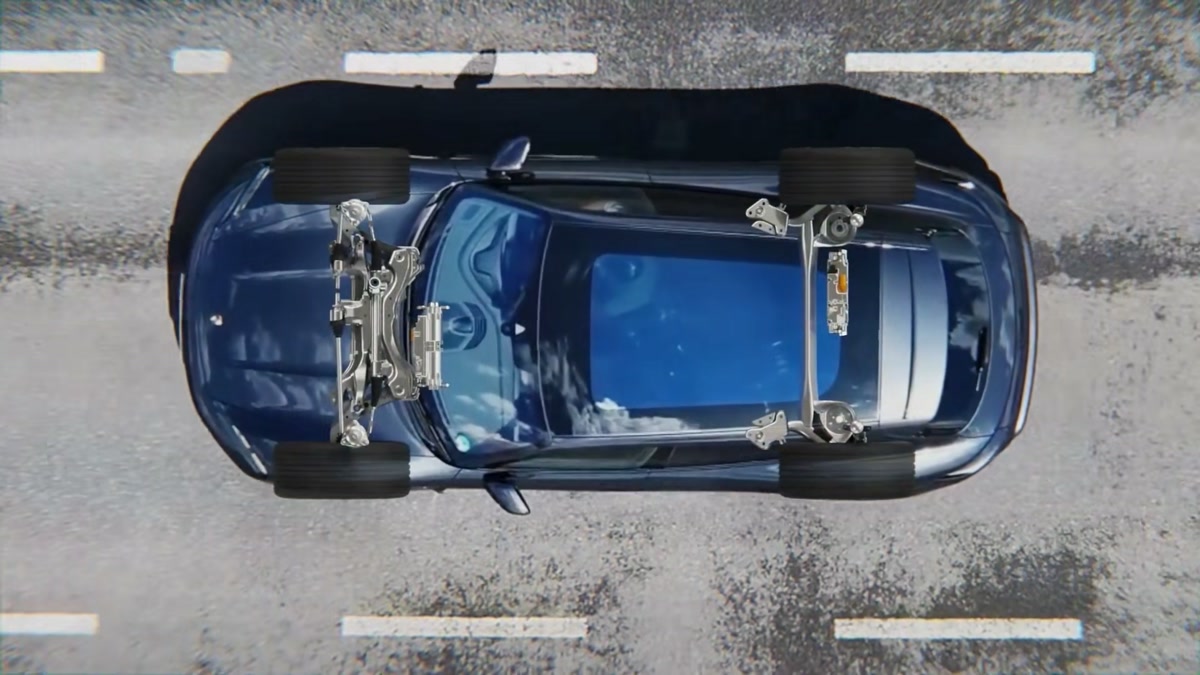
Kybridia Studio — MME Over Protection. The failure mode sequence, which would require destroying physical equipment to demonstrate live, shown in full at controlled speed.
A 3D animation of an industrial product has no physical constraints. The camera can enter the sealed assembly. The cross-section cut can reveal internal geometry at any point in the operating cycle. The failure mode can be demonstrated at controlled speed, paused at the critical moment, and replayed. The scale can be arbitrary — a 40-tonne press can be shown in full detail on a 55-inch display.
The animation can also show the product doing what it does best: operating. A static photograph of a valve shows a valve. An animation shows the disc rotating, the flow path opening, the pressure differential driving fluid through the geometry at the correct velocity profile. One is evidence the product exists. The other is evidence it works.
We built exactly this for BVM Butterfly — a cross-section cut through the valve body that follows the disc rotation from fully closed to fully open, with a secondary sequence showing the seat seal under pressure. Their sales director told us it was the first time they had been able to demonstrate the internal geometry to a client without bringing a physical cut-away sample.
The ROI case
Compare the cost of commissioning a professional industrial animation — typically £8,000–£25,000 for a production-quality piece — against the cost of a major trade show appearance. Stand space at Hannover Messe for a 50-square-metre stand runs to approximately £15,000–£25,000 before fitting, graphics, or logistics. The animation costs less than the stand space, lasts indefinitely, and works on every platform the company uses: the trade show display, the sales team's tablets, the website, the distributor network.
Industrial marketing specialists Sparksight have published case study data showing that technical product animations deployed across sales channels consistently reduce the length of the technical explanation phase of sales conversations — the part of the meeting where a salesperson spends 20 minutes explaining something that an animation communicates in 90 seconds.
Our MME Over Protection project is a clear example: the animation is now the centrepiece of their trade show presence and their primary pre-qualification asset in the sales process. Their sales team reports it consistently shortens the technical explanation phase with buyers who are not mechanical engineers.
The formats that work on a stand
A trade show animation needs to work without audio in a noisy environment. It needs to loop seamlessly. It needs to be legible on a large display from several metres away. It needs to work for a visitor who stops watching halfway through — the visual logic should be clear at any point in the sequence.
These requirements are different from a product page animation or a conference film. A studio experienced in industrial animation will build for these constraints from the start, not adapt a product page version at delivery. This is a brief question worth asking any studio you are evaluating.
How to brief an industrial animation
The most useful thing you can provide at brief stage is the engineering CAD — the same files your design team uses. The second most useful is a written description of what the product does that a technically literate non-specialist could understand. Not the commercial description from the brochure, but the engineering description of the operating principle.
The animations that make the biggest difference in the sales process are the ones that answer a question the sales team cannot answer on a whiteboard: what happens inside this thing, and why does that matter. Start that conversation with us.
“Tell us what you cannot show at a trade show and why. That is almost always the right starting point for the brief.”
— Kybridia Studio